johndoe@gmail.com
Are you sure you want to reset the form?
Your mail has been sent successfully
Are you sure you want to remove the alert?
Your session is about to expire! You will be logged out in
Do you wish to stay logged in?
Expanding biblical understanding through diverse perspectives
From exploring the Bible and modern-day politics, identities, and colonialism to viewing biblical texts through Latinx, African, and gender-critical lenses, Approaches to the Bible offers scholars, students, and socially engaged readers modern, inclusive scholarship for studying Scripture. Comprised of leading scholarly eBooks and reference, this dynamic collection provides a holistic, critically-engaged resource for advancing and shaping the future of biblical study and theology.
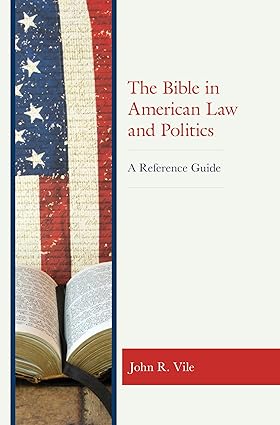
By providing essays on key speeches, books, documents, legal decisions, and other writings throughout American history that have sought to buttress arguments through citations to Scriptures or to Biblical figures, John Vile provides an indispensable guide for scholars and students in religion, American history, law, and political science to understand how Americans throughout its history have interpreted and applied the Bible to legal and political issues.
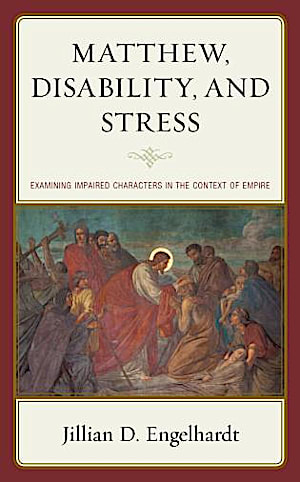
In Matthew, Disability, and Stress: Examining Impaired Characters in the Context of Empire, Jillian D. Engelhardt examines four Matthean healing narratives, focusing on the impaired characters in the scenes. Her reading is informed by both empire studies and social stress theory, a method that explores how the stress inherent in social location can affect psychosomatic health. By examining the Roman imperial context in which common folk lived and worked, she argues that attention to social and somatic circumstances, which may have accompanied or caused the described disabilities/impairments, destabilizes readings of these stories that suggest the encounter with Jesus was straightforwardly good and the healing was permanent. Instead, Engelhardt proposes various new contexts for and offers more nuanced characterizations of the disabled/impaired people in each discussed scene, resulting in ambiguous interpretations that de-center Jesus and challenge able-bodied assumptions about embodiment, disability, and healing.
Going against the false perception that all Latinx views on the Bible are homogeneous, the contributors in this book use different hermeneutic perspectives to interpret the New Testament. Each chapter examines one of the twenty-seven documents thematically instead of following the traditional verse-by-verse commentary format.
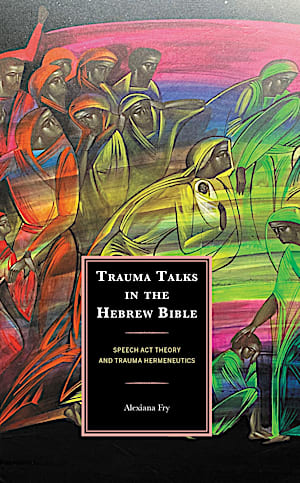
If one of the many ways out of trauma’s impact is through words, then why not use a theory closely attached to words and their impact alongside current trauma theories in understanding historical narratives? In Trauma Talks in the Hebrew Bible: Speech Act Theory and Trauma Hermeneutics, Alexiana Fry utilizes a diverse methodology of speech act theory and trauma hermeneutics to argue for a more fluid and holistic approach in re-interpreting narratives in the Hebrew Bible. Examining a more dissociative “objective” manner in reading, each chapter asks the question of “what about our own bodies?” Purposely provoking attunement with oneself to embrace “empathic unsettlement,” the book refuses to give any semblance of finality. Through the many types of performative utterances and traumas both individual and collective—Joshua, Judges, Samuel, Ecclesiastes, and Hosea—Fry investigates the varied layers that constitute their many meanings. The reader is invited into an awareness and openness that is the human experience in biblical studies.
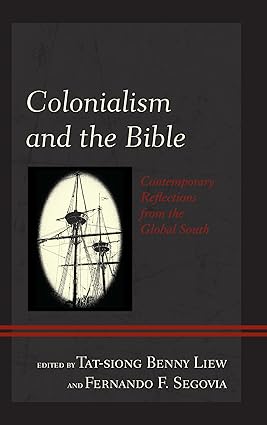
This volume addresses the problematic relationship between colonialism and the Bible. It does so from the perspective of the Global South, calling upon voices from Africa and the Middle East, Asia and the Pacific, and Latin America and the Caribbean. The contributors address the present state of the problematic relationship in their respective geopolitical and geographical contexts. In so doing, they provide sharp analyses of the past, the present, and the future: historical contexts and trajectories, contemporary legacies and junctures, and future projects and strategies. Taken together, the essays provide a rich and expansive comparative framework across the globe.